
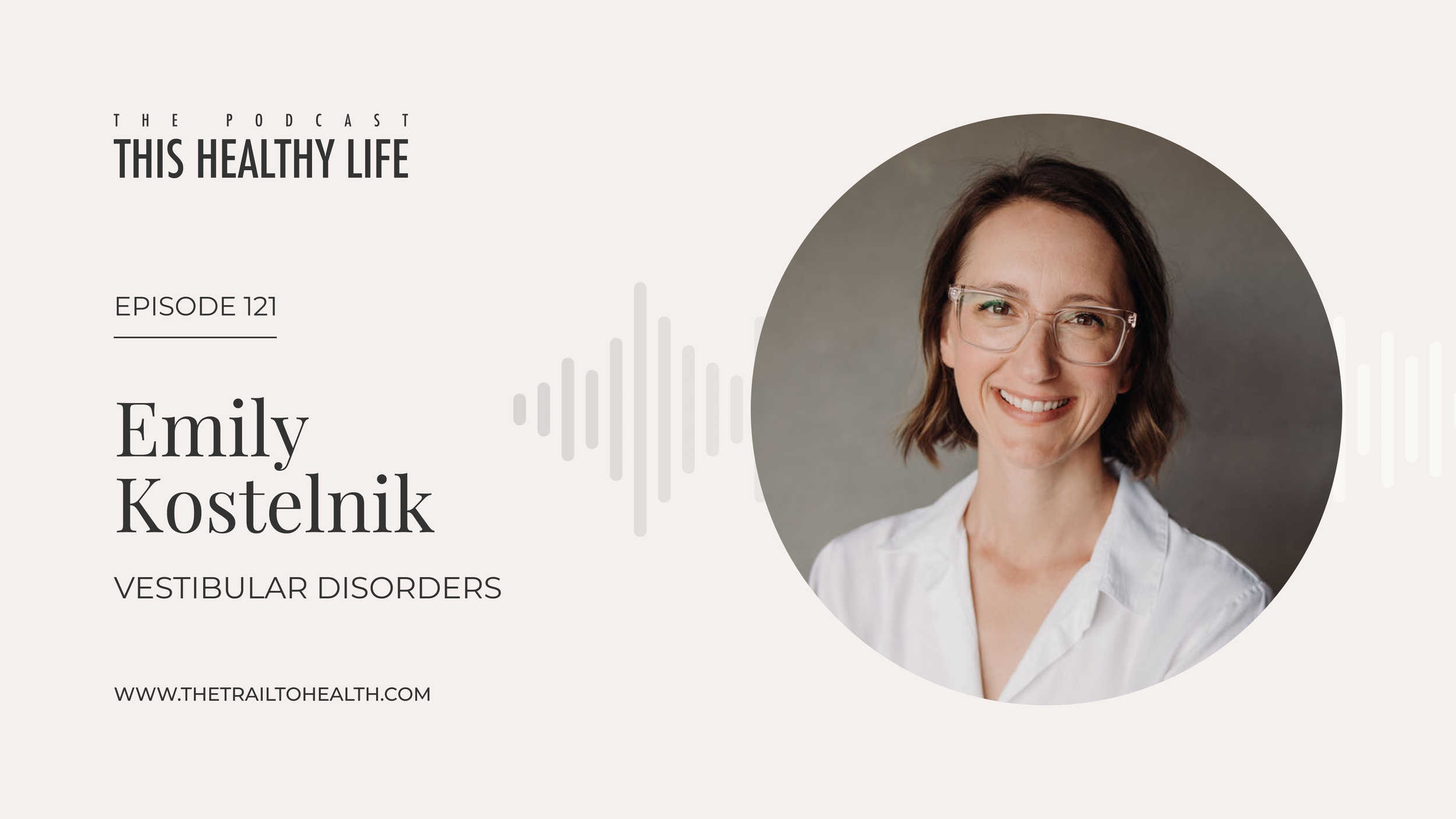

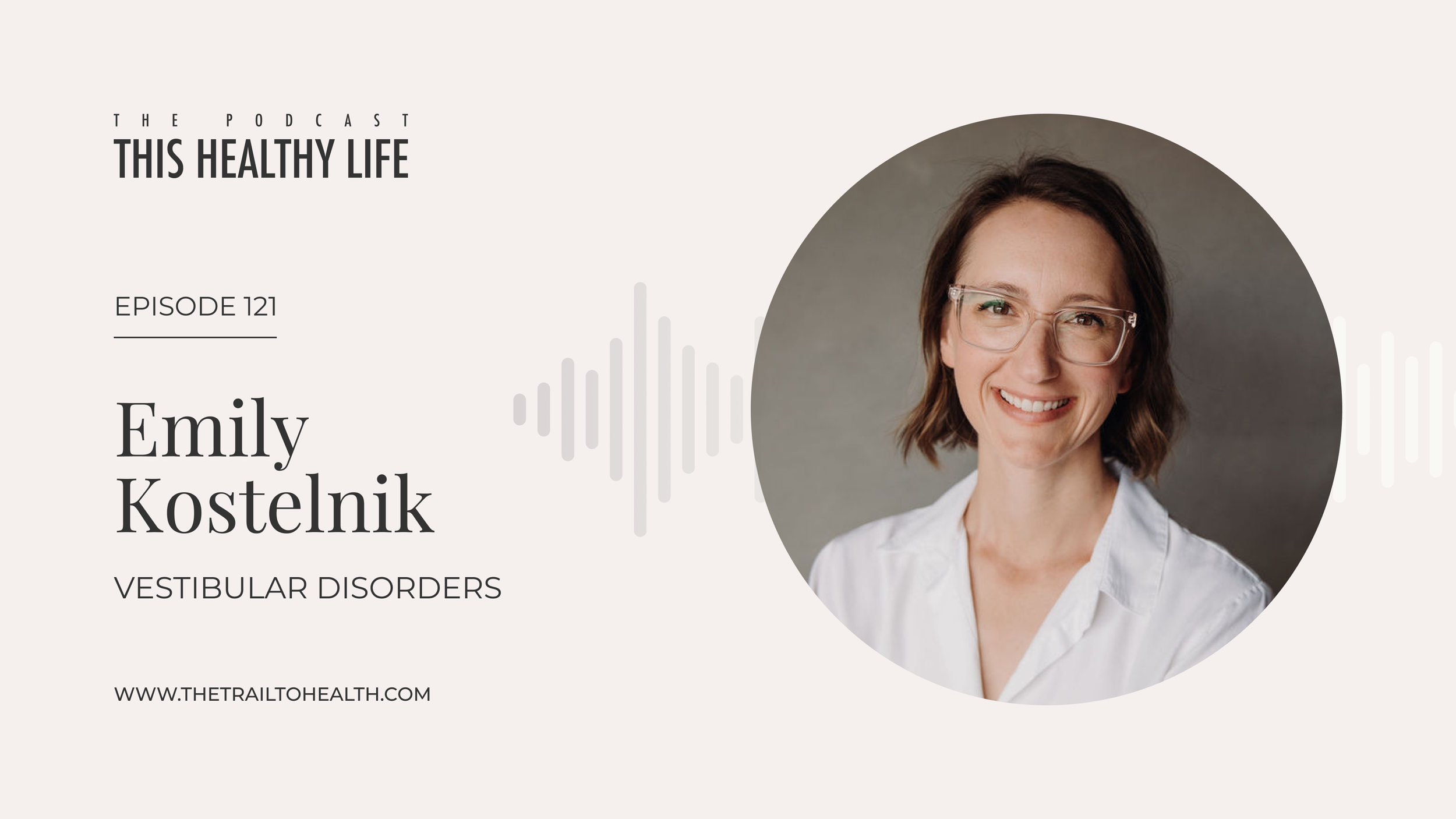
Episode 121 - Emily Kostelnik - The Hidden World Of Vestibular Conditions
/
Listen To The Episode
Meet Emily Kostelnik
Dr. Emily Kostelnik is a Clinical Health Psychologist specializing in vestibular disorders who brings both professional expertise and personal lived experience to her work. She is the founder of two organizations: Rooted Behavioral Education offers virtual behavioral health courses and coaching for those with chronic dizziness and The Vestibular Psychologist is private practice providing individual therapy and professional consultation to help clients reclaim a full and meaningful life.
What We Talk About
• Definition of the vestibular system, the inner ear's balance mechanism, working with vision and proprioception.
• Common inner-ear causes: BPPV (loose ear crystals) and Meniere's disease.
• Central/neurological causes: vestibular migraine and persistent postural perceptual dizziness (PPPD).
• Vestibular migraine is the most common cause of dizziness in women under 60, often without head pain.
• Motion sickness in childhood as a possible early marker of vestibular migraine.
• Why diagnosis is hard: it falls between ENT and neurology specialties.
• Right specialists to see: otologist/neurotologist, balance-focused neurologist, headache specialist, or vestibular physical therapist.
• Ruling out other causes first (anemia, cardiac issues) before a vestibular diagnosis.
• Symptoms often appear "suddenly" but are usually building for a long time (the "final straw" concept).
• Root causes: nervous system dysregulation, toxic load, gut dysfunction, liver/bile issues.
• Overlap with MCAS, POTS, hypermobility, and neurodivergence (ADHD/autism).
• Mold exposure and mycotoxins as a major contributor to inflammation and vestibular symptoms.
• Nutrient deficiencies commonly seen (iron, vitamin D, B vitamins) in patients.
• Infections like Lyme disease, H. pylori, and candida as possible triggers.
• Histamine and mast cell activation's role in vestibular symptoms, and use of antihistamines/low-histamine diets.
• Ongoing research into hypermobility, connective tissue disorders, and genetic pathway variants in vestibular migraine.
• Prevalence: vestibular migraine affects about 1 to 2% of the population; BPPV affects about 7%. It's more common in women, with a research funding gap.
• Treatment options ranging from simple (repositioning maneuvers for BPPV) to complex (preventive medications, supplements, physical therapy, psychotherapy, root-cause approaches).
• Advice for listeners: start with a primary care doctor or vestibular physical therapist; hope lies in CGRP medications and inflammation-focused research.
Episode Resources
Viome
Uncover the gut-histamine connection behind your dizziness with an at-home test.
https://shop.thetrailtohealth.com/viome
Thorne
Supplements including Quercetin Phytosome, a highly absorbable antioxidant that helps regulate histamine release.
https://shop.thetrailtohealth.com/Thorne
Pulsetto
A wearable vagus nerve stimulator that calms your nervous system in minutes.
https://shop.thetrailtohealth.com/Pulsetto
Earthing
Grounding products that calm nervous system dysregulation and reduce inflammation.
https://shop.thetrailtohealth.com/earthing
Tick Tock Repellent
Natural tick protection to help prevent Lyme disease and its related complications.
https://shop.thetrailtohealth.com/ticktocknaturals
Connect With Emily Kostelnik
Website:
https://www.rootedbehavioraleducation.com/
Instagram:
https://www.instagram.com/dremilykostelnik
Facebook:
https://www.facebook.com/dremilykostelnik
TikTok:
https://www.tiktok.com/search?q=%40dremilykostelnik&t=1785699859015
Keywords
vestibular disorder, vertigo causes, chronic dizziness, vestibular migraine, BPPV treatment, MCAS symptoms, histamine intolerance, mold toxicity, nervous system dysregulation, Lyme disease dizziness